
How Does Air Conditioning Work? A Simple Guide
Air conditioners cool by moving heat out of a room, not by making cold air. Here is how the process works in plain language.
Most of us use air conditioning without giving much thought to what happens inside the unit. Understanding the basics can help you use your system more effectively and recognise when something may not be working as it should.
This guide explains how an air conditioner cools a room, the main components involved, how heat is moved outdoors, and why filters and airflow matter.
How an Air Conditioner Cools a Room
An air conditioner works by removing heat from the air inside your room and releasing it outdoors. The cooled air then circulates back into the room, helping maintain a comfortable temperature. A thermostat monitors the room’s temperature and controls when the unit turns on or off to keep it close to your preferred setting. As the air cools, the system also removes some moisture from the air, which drains away through a small pipe. If you have a reverse-cycle air conditioner, the process can work in reverse during colder weather by drawing heat from the outdoor air and transferring it indoors. This allows the same unit to provide both cooling and heating throughout the year.
The Main Components of an Air Conditioning System
A typical split-system air conditioner consists of an indoor unit and an outdoor unit connected by pipes. These units work together using four main components: the evaporator, compressor, condenser, and refrigerant. The evaporator coil is located inside the indoor unit, where it absorbs heat from the warm air in the room. The compressor, found in the outdoor unit, circulates the refrigerant through the system and increases its pressure, allowing it to release the absorbed heat. The condenser coil then releases this heat into the outdoor air with the help of a fan. Throughout this process, the refrigerant changes between liquid and gas, allowing it to transfer heat efficiently. Because handling refrigerant requires specialised training and licensing, this work should always be carried out by a qualified technician.
Air conditioners also come in different designs to suit various spaces and needs. Indoor units may be wall-mounted, floor-mounted, or installed as ceiling cassettes, while ducted systems use a central unit to distribute conditioned air to multiple rooms through a network of ducts.
How Heat Is Transferred Outdoors
An air conditioner cools a room through a continuous process called the refrigeration cycle. It begins when liquid refrigerant enters the evaporator and absorbs heat from the indoor air, causing it to turn into a gas. The compressor then increases the gas’s pressure and temperature before sending it to the condenser in the outdoor unit. There, a fan blows air across the coil, allowing the refrigerant to release the heat outdoors and turn back into a liquid.
The refrigerant then passes through a component that lowers its pressure, preparing it to absorb heat again and repeat the cycle. This same basic process is used in refrigerators and cool rooms, which rely on similar technology to keep spaces and items cool. The cycle continues while the air conditioner is running, with the system’s controls adjusting the compressor and fan speeds to maintain a comfortable indoor temperature. Many modern air conditioners can vary their output as needed instead of simply switching fully on or off, helping keep the room temperature more consistent.
Why Air Filters and Airflow Matter
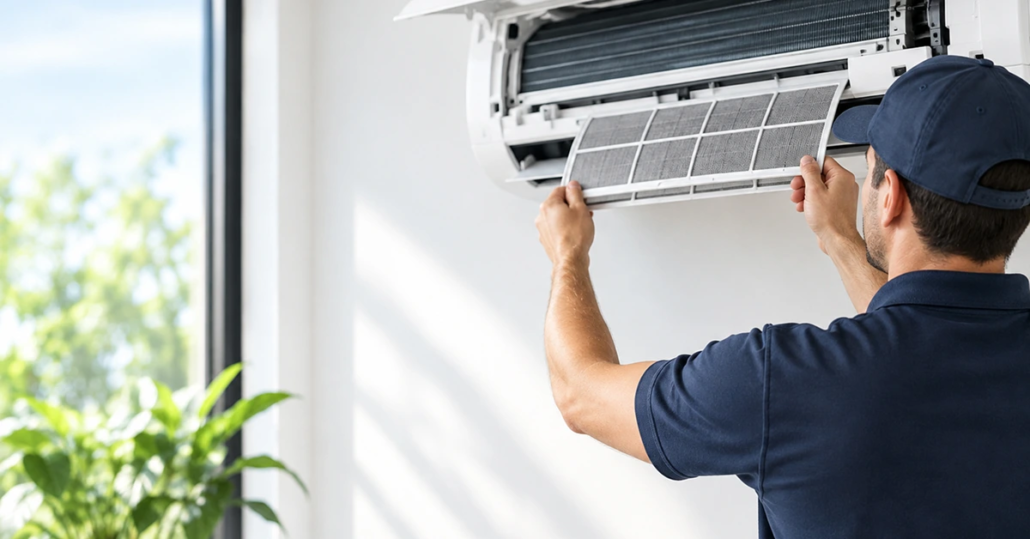
Proper airflow is essential for an air conditioner to work efficiently. The filters capture dust and other particles before they reach the evaporator coil, helping protect the system and keep indoor air cleaner. However, when filters become clogged, airflow is reduced, which can affect cooling performance and force the unit to work harder. Blocked vents, closed doors, and furniture placed in front of the indoor unit can also restrict airflow. Keeping the areas around both the indoor and outdoor units clear helps the system operate properly.
One of the simplest ways to maintain good airflow is to clean or replace the filters according to the manufacturer’s recommendations. Regular professional servicing is also important because some components are difficult to access and clean yourself. Dust-covered coils and blocked outdoor units can further affect the system’s ability to absorb and release heat, reducing its overall performance. If you are unsure how to clean your air conditioner’s filters, check the owner’s manual or ask a qualified technician for guidance.
Understanding how your system works makes it easier to look after. If you need help with your air conditioning, contact WCA HVAC&R to discuss our servicing, repairs and installation.


