
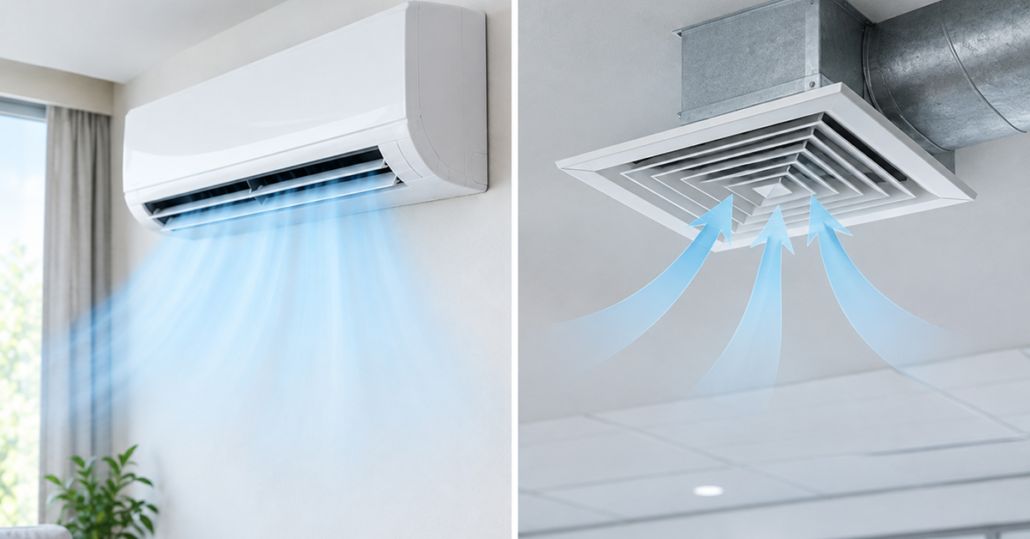
What Is the Difference Between Air Conditioning and Ventilation?
Air conditioning and ventilation do different jobs. Understanding the difference helps you plan for both comfort and fresh air.
Air conditioning and ventilation are often mentioned together, and many people assume they are the same thing. They are not, and knowing how they differ helps you make better decisions about comfort and air quality in your home or workplace.
This post explains what each system does, how they differ and work together, and how to decide what your property needs.
What Is Air Conditioning?
Air conditioning controls the temperature inside a space by cooling the air in hot weather, while reverse-cycle systems can also provide heating during colder months. Many systems also remove some moisture from the air as it passes over the cooling coil, helping make the room feel more comfortable.
However, most air conditioners mainly recirculate indoor air rather than bring in large amounts of fresh air from outside. They come in different types, from split systems designed for individual rooms to ducted systems that serve an entire building. Humidity control also varies between models, so if moisture is a concern, discuss it with a qualified technician when choosing a system.
What Is Ventilation?
Ventilation involves bringing fresh air into a building and removing stale indoor air. This can happen naturally through open windows and vents or mechanically through fans and ducted systems. Common examples include bathroom exhaust fans, kitchen ventilation systems, and mechanical ventilation in commercial buildings.
Ventilation helps remove moisture, odours, and indoor pollutants while supplying fresh air for occupants. Unlike air conditioning, its primary purpose is air exchange rather than maintaining a specific temperature. The right ventilation system depends on how the space is used, as bathrooms, commercial kitchens, and meeting rooms all have different requirements.
Key Differences, and How They Work Together
The main difference is that air conditioning focuses on temperature control and, in some cases, humidity, while ventilation focuses on fresh air and indoor air quality. Although they serve different purposes, the two systems often work together to create a comfortable indoor environment.
For example, air conditioning can cool a room while a separate ventilation system supplies fresh air. Air conditioning may also reduce humidity, while ventilation helps remove moisture produced by activities such as cooking and showering.
It is important to remember that a room can feel cool but still have stale air if there is not enough fresh air exchange. Understanding this difference can help you identify whether your property needs better ventilation, improved cooling, or both.
Which System Does Your Property Need?
The right solution depends on your building, how many people use the space, and the activities that take place there. Homes, offices, shops, kitchens, and gyms all have different cooling and ventilation needs. Factors such as moisture, odours, heat sources, and building design should also be considered.
Some buildings must meet specific ventilation requirements, so it is important to check the standards that apply to your property. A qualified professional can assess your space and recommend a suitable approach that addresses both comfort and indoor air quality.
If you are building or renovating, planning air conditioning and ventilation together can make installation easier and help avoid costly changes later. Even in an existing property, discussing both systems at the same time may reveal practical improvements that suit your needs and budget.
To discuss the requirements of your property and the systems that may suit it, contact WCA HVAC&R or explore our services.


